Hard Tack, Coffee and Artificial Intelligence
by Jonah Begone
We are at the dawn of the Age of Artifical Intelligence. It is changing our lives, and its ultimate usefulness and/or destructiveness remains to be seen. Despite the fact that it seems to be packing Facebook with pieces with factual errors and egregiously bad prose, I think it gets a rather bad rap. It certainly has its uses.
For the past six months or so I've been playing with ChatGPT's Sora AI image and video production software. Its fun! An early experiment was to turn my very own created childhood superhero characters into photo-realistic images, and this was always a bit startling. (Fatman and Blubber turned out especially well.)
But what about the American Civil War? Is there any utility to artificial intelligence with this subject? A beloved work is John D. Billings' Hard Tack and Coffee of 1887, which could serve as the one-volume reference book to what life was like for the average Yank soldier. It is fondly regarded among reenactors, and one of the things that makes it especially delightful are the clever line drawings by artist Charles W. Reed, who served as a topographical engineer on General Warren's staff. They have been borrowed heavily by Civil War reenactment unit newsletter editors (I plead guilty).
My first effort was in bringing the camp Jonah illustrations to life. That web page is here (scroll to bottom). Encouraged, I gave Sora as many other Reed illustrations as I could before they retired the old version that I was somewhat fluent with. (The newer version of Sora AI mainly does video, but I'm told it can also produce fixed images; I haven't figured out how to do that yet.)
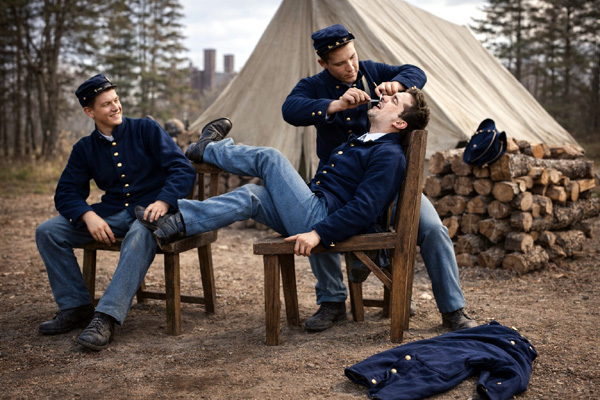
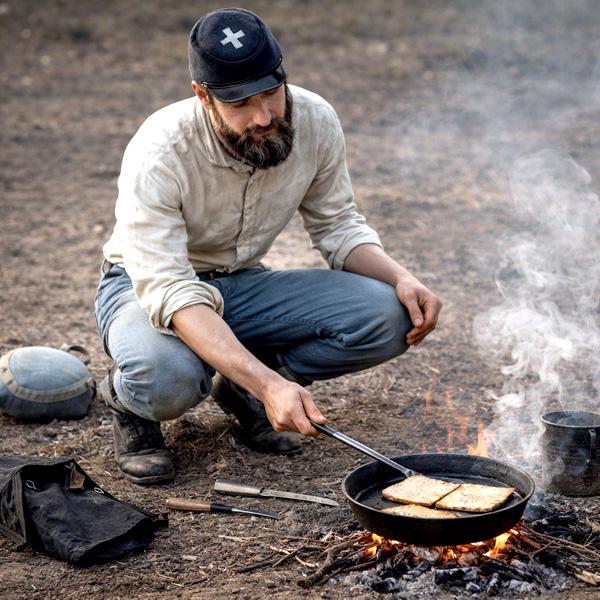
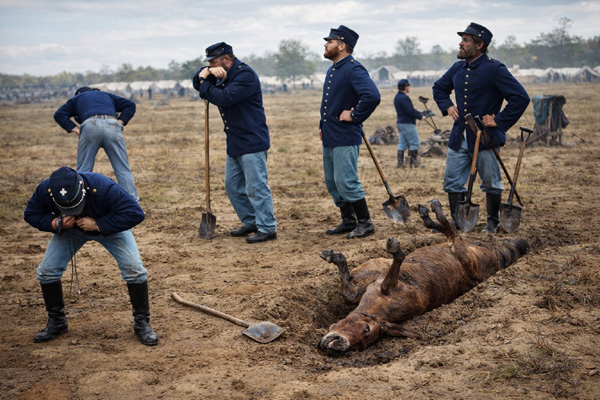
ChatGPT's Sora AI brings its own challenges to the subject of conversion: For one, it can't seem to render light blue wool pants into something that does not resemble modern denim jeans, no matter what I write in the prompts. For another, at times it has a mind of its own that I cannot change no matter how carefully I phrase the conversion prompts. I tell it that something is, for instance, a pipe, and it insists upon rendering it like a car engine part. I then have to do some Photoshop work. Corps badges on hats is a challenge. Understanding the emotions behind line drawing facial expressions is iffy. And, lastly, it seems to produce faces which often, to my eyes, look very much 21st century. In other words, these guys look more like reenactors than people captured in daguerrotypes and ambrotypes.
Could I have spent even more time with this and produced better images? Probably. But I did all this with the free version of ChatGPT. (I'm not paying for AI!) And I was limited in how many images I could convert in a 24-hour period. Finally, as I mention above, I was rushed with the mid-March retirement of Old Sora.
By and large, however, this was a fun effort and gives us another look - another version - of Reed's always clever line drawings. I hope you find them interesting!
Jonah Begone, March 2026
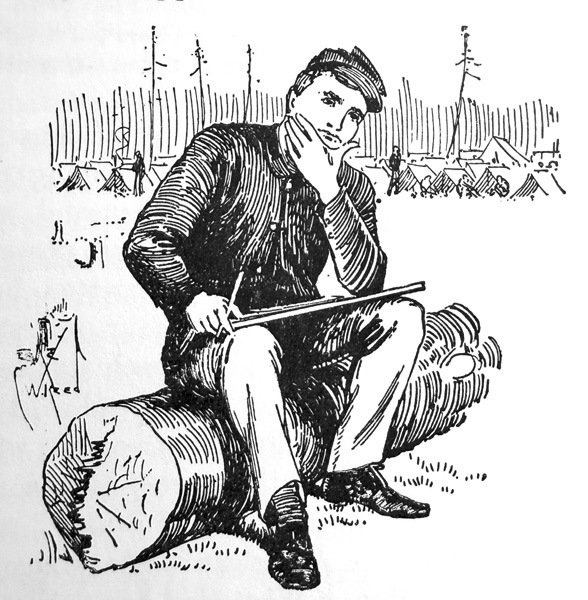
Writing Home: "...all wrote letters more or less, but there were a few men who seemed to spend the most of their spare time in this occupation. Especially was this so in the earlier part of a man's war experience. The side or end strip of a hardtack box, held on the knees, constituted the writing-desk on which this operation was performed. It is well remembered that in the early months of the war silver money disappeared, as it commanded a premium, so that, change being scarce, postage stamps were used instead. This was before scrip was issued by the government to take the place of silver; and although the use of stamps as change was not authorized by the national government, yet everybody took them, and the soldiers in particular just about to leave for the war carried large quantities away with them - not all in the best of condition. This could hardly be expected when they had been through so many hands."
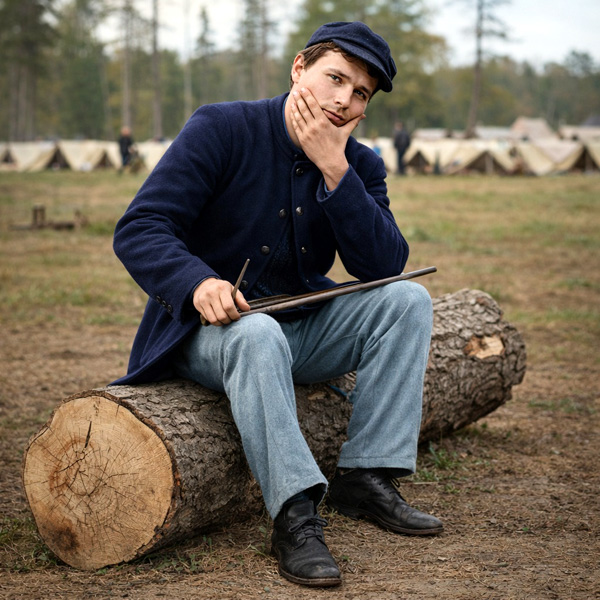
I'm very fond of this particular drawing; I used it when I was a newsletter editor writing an article entitled "Campfire Ramblings." In some ways, it's me.
In the original you can see Charles W. Reed's distinctive signature at left.
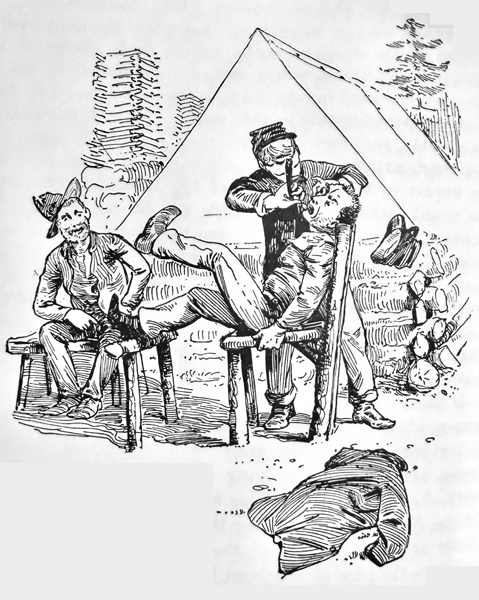
"Nearly every organization had its barber in established camp. True, many men never used the razor in the service, but allowed a shrubby, straggling growth of hair and beard to grow, as if to conceal them from the enemy in time of battle. Many more carried their own kit of tools and shaved themselves, frequently shedding innocent blood in the service of their country while undergoing the operation. But there was yet a large number left who, whether from lack of skill in the use or care of the razor, or from want of inclination, preferred to patronize the camp barber. This personage plied his vocation inside the tent in cold or stormy weather, but at other times took his post in rear of the tent, where he had improvised a chair for the comfort (?) of his victims. This chair was a product of home manufacture. Its framework was four stakes driven into the ground, two long ones for the back legs, and two shorter ones for the front. On this foundation a super-structure was raised which made a passable barber's chair. But not all the professors who presided at these chairs were finished tonsors, and the back of a soldier's head whose hair had been 'shingled' by one of them was likely to show each course of the shingles with painful distinctness. The razors, too, were of the most barbarous sort, like the 'trust razor' of the old song with which the Irishman got his "Love O' God Shave.'"
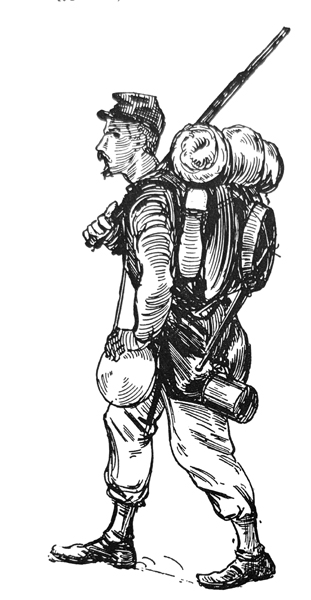
Heavy Marching Order
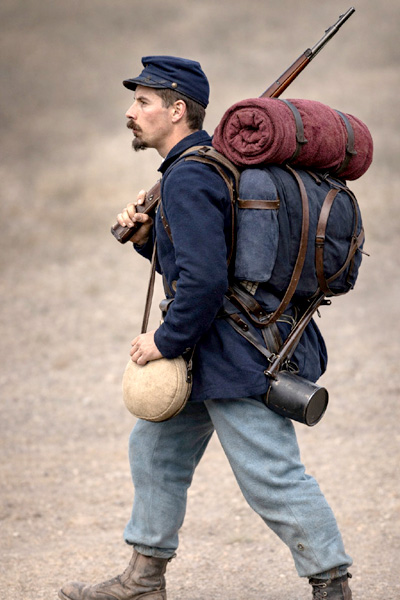
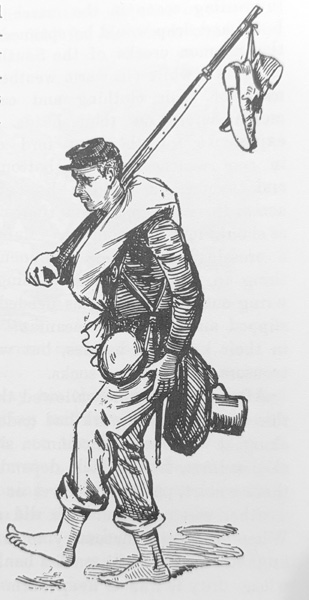
Light Marching Order
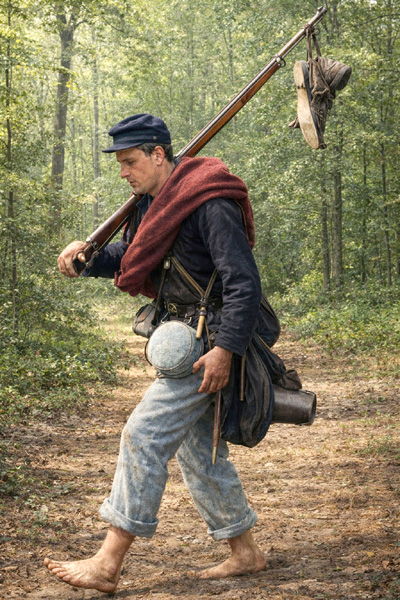
"The infantry made way with a large amount of clothing. Much of it was thrown away on the march. A soldier burdened with a musket, from forty to eighty rounds of ammunition, according to circumstances; a haversack stuffed plump as a pillow, but not so soft, with three days rations; a canteen of water, a woollen and rubber blanket, and a half shelter tent, would be likely to take just what more he was obliged to. So, with the opening of the spring campaign, away would go all extra clothing. A choice was made between the dress coat and blouse, for one of these must go. Then some men took their overcoat and left their blanket. In brief, when a campaign was fairly under way the average infantryman's wardrobe was what he had on. Only that and nothing more. At the first start from camp many would burden themselves with much more than the above, hut after a few miles tramp the roadside would be sprinkled with the cast-away articles. There seemed to be a difference between Eastern and Western troops in this respect, for reasons which I will not attempt now to analyze, for Grant says (Memoirs, vol. ii., pp. 190-191): "I saw scattered along the road, from Culpeper to Germania Ford, wagon-loads of new blankets and overcoats thrown away by the troops to lighten their knapsacks, an improvidence I had never witnessed before." It was a way the Army of the Potomac had of getting into light marching order."
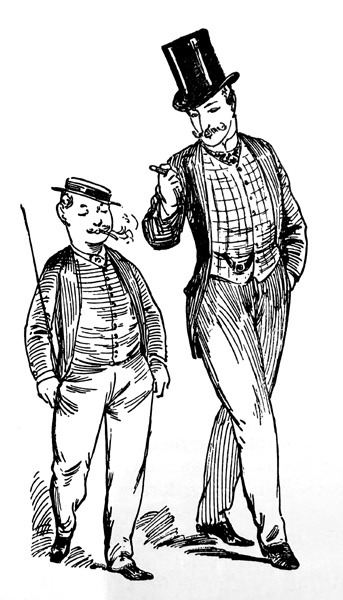
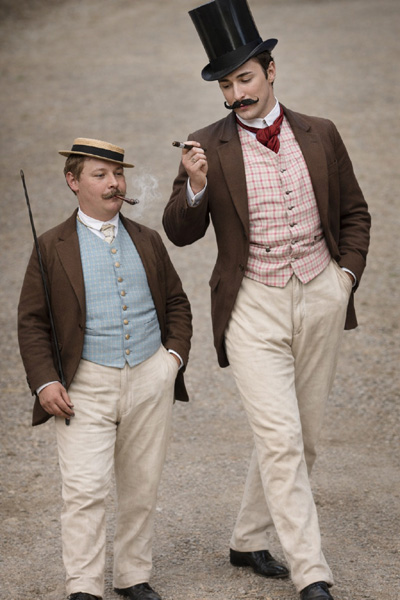
THE SWEET LITTLE MAN.
Dedicated to the Stay-at-Home Rangers.
Now while our soldiers are fighting our battles, Each at his post to do all that he can,
Down among Rebels and contraband chattels, What are you doing, my sweet little man?
All the brave boys under canvas are sleeping; All of them pressing to march with the van,
Far from the home where their sweethearts are weeping; What are you waiting for, sweet little man?
You with the terrible warlike moustaches, Fit for a colonel or chief of a clan,
You with the waist made for sword-belts and sashes, Where are your shoulder-straps, sweet little man?
Bring him the buttonless garment of woman! Cover his face lest it freckle and tan;
Muster the Apron-string Guards on the Common, That is the corps for the sweet little man!
Give him for escort a file of young misses, Each of them armed with a deadly rattan;
They shall defend him from laughter and hisses, Aimed by low boys at the sweet little man.
All the fair maidens about him shall cluster, Pluck the white feather from bonnet and fan,
Make him a plume like a turkey-wing duster, That is the crest for the sweet little man.
Oh, but the Apron-string Guards are the fellows! Drilling each day since our trouble began,
"Handle your walking-sticks!" "Shoulder umbrellas!" That is the style for the sweet little man.
Have we a nation to save? In the first place Saving ourselves is the sensible plan.
Surely, the spot where there's shooting's the worst place Where I can stand, says the sweet little man.
Catch me confiding my person with strangers, Think how the cowardly Bull-Runners ran!
In the brigade of the Stay-at-home Rangers Marches my corps, says the sweet little man.
Such was the stuff of the Malakoff takers, Such were the soldiers that sealed the Redan;
Truculent housemaids and bloodthirsty Quakers Brave not the wrath of the sweet little man!
Yield him the sidewalk, ye nursery maidens! Sauve qui peut! Bridget, and Right about! Ann;
Fierce as a shark in a school of menhadens, See him advancing, the sweet little man!
When the red flails of the battlefield's threshers Beat out the continent's wheat from its bran,
While the wind scatters the chaffy seceshers, What will become of our sweet little man?
When the brown soldiers come back from the borders, How will he look while his features they scan?
How will lie feel when he gets marching orders, Signed by his lady love ? sweet little man.
Fear not for him though the Rebels expect him, Life is too precious to shorten its span;
Woman her broomstick shall raise to protect him, Will she not fight for the sweet little man!
Now, then, nine cheers for the Stay-at-home Ranger! Blow the great fish-horn and beat the big pan!
First in the field, that is farthest from danger! Take your white feather plume, sweet little man!
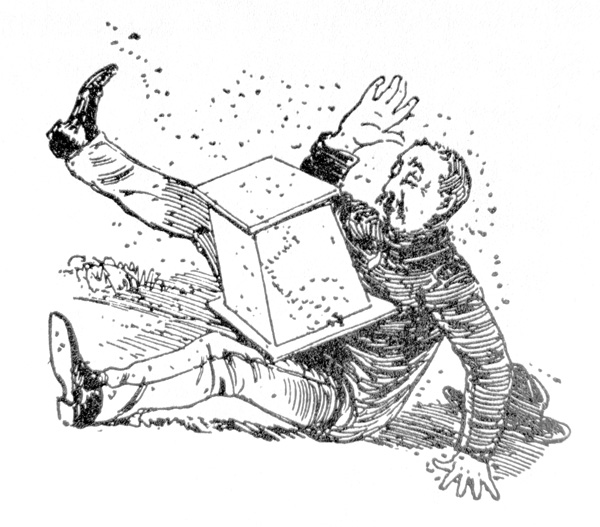
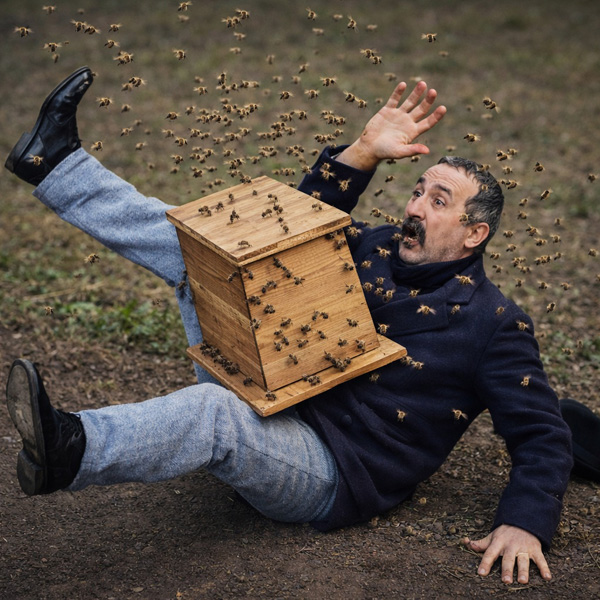
"Bee-hives were among the most popular products of foraging. The soldiers tramped away many a mile by night in quest of these dispositions of sweets. I recall an incident occurring in the Tenth Vermont Regiment - once brigaded with my company - when some of the foreagers, who had been into camp, after the men had wrapped themselves in their blankets, and, by way of a joke, set it down stealthily on the stomach of the captain of one of the companies, making business quite lively in that neighborhood shortly afterwards."
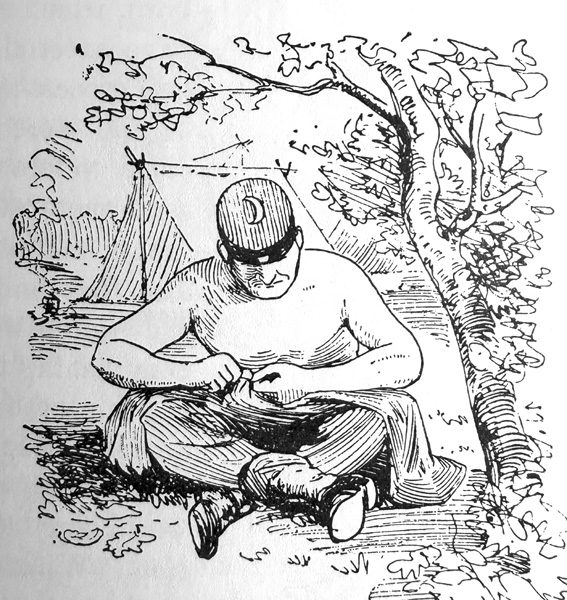
Ticks: "...he would seat himswlf taking his garments across his knees in turn, conscientiously doing his (k)nitting work, inspecting every fibre with the scrutiny of a dealer in broadcloths."
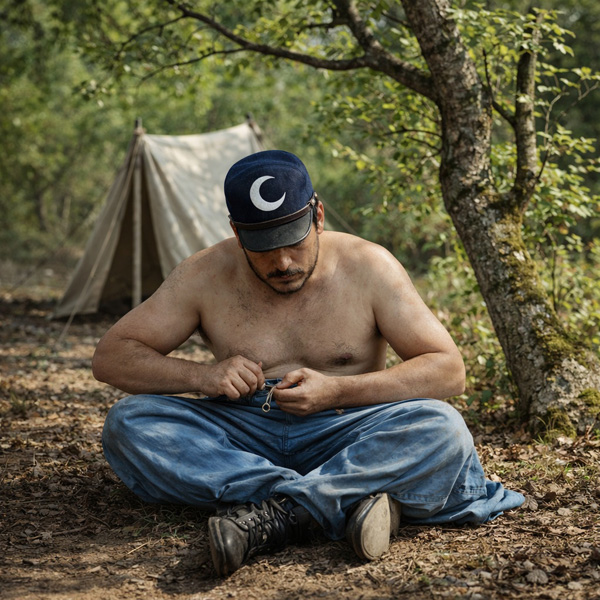
At the present time, Sora has a "guardrail" against depicting shirtless males. But sometimes it forgets about this and produces an image anyway.
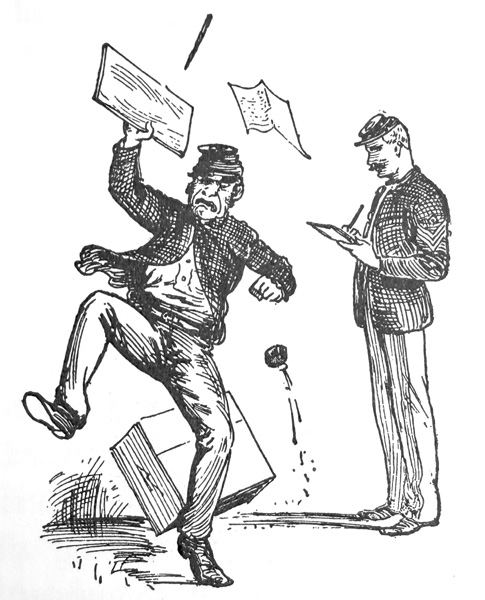
"...the constitutionally high-tempered and profane man. He finds no fault with the justice of the sergeant in assigning to him a participation in the ceremonies of the hour; but he had got comfortably seated to write a letter when the summons came, and, pausing only long enough to inquire the nature of the detail, he pitches his half-written letter and materials in one direction, his lap-board in another, gets up, kicks over the box or stool on which he was sitting, pulls on his cap with a vehement jerk, and then opens his battery. He directs none of his unmilitary English at the sergeant - that would hardly do but he lays his furious lash upon the poor innocent back of the government, though just what branch of it is responsible he does not pause between his oaths long enough to state. He pursues it with the most terrible of curses uphill, and then with like violent language follows it down. He blank blanks the whole blank blank war, and hopes that the South may win. He wishes that all the blank horses were in blank, and adds by way of self-reproach that it serves any one, who is such a blank blank fool as to enlist, right to have this blank, filthy, disgusting work to do. And he leaves the stockade shutting the door behind him 'with a wooden damn,' as Holmes says, and goes off to report, making the air blue with his cursing. Let me say for this man, before leaving him, that he is not so hardened and bad at heart as he makes himself appear; and in the shock of battle he will be found standing manfully at his post minus his temper and profanity."
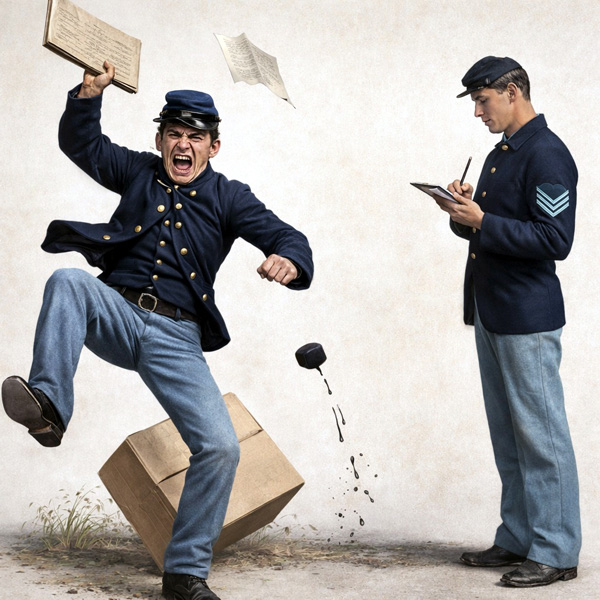
No mustache on the unusually modern-looking sergeant.
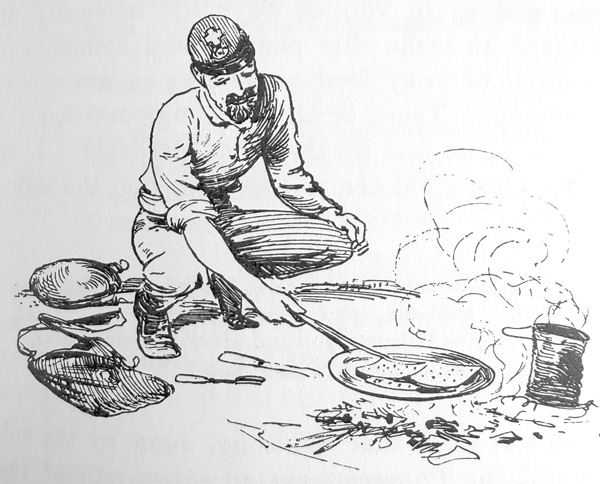
Hardtack: "Some crumbled them in cold water, then fried the crumbs in the juice and fat of meat. A dish akin to this one, which was said to 'make the hair curl,' and certainly was indigestible enough to satisfy the cravings of the most ambitious dyspeptic, was prepared by soaking hardtack in cold water, then frying them brown in pork fat, salting to taste. Another name for this dish was 'skillygalee.' Some liked them toasted, either to crumb in coffee, or, if a sutler was at hand whom they could patronize, to butter. The toasting generally took place from the end of a split stick, and if perchance they dropped out of it into the campfire, and were not recovered quickly enough to prevent them from getting pretty well charred, they were not thrown away on that account, being then thought good for weak bowels."
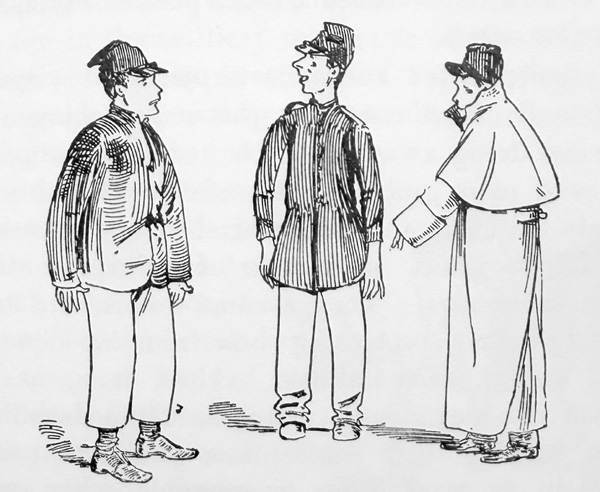
"There were at least two kinds of recruits to be found in every squad that arrived in camp. One of these classes was made up of modest, straightforward men, who accepted their new situation with its deprivations gracefully, and brought no sugar-plums to camp with which to ease their entrance into stern life on government fare and the hardships of government service. They wore the government clothing as it was furnished them, from the unshapely, un-comely forage cap to the shoddy, inelastic sock. It mattered naught to them that the limited stock of the quartermaster furnished nothing that fitted them. They accepted what he tendered cheerfully, believing it to be all right, and seemed as happy and as much at ease in a wilderness of overcoat and breeches as others did who had been artistically renovated by the company tailor. But they were none the less ludicrous and unsoldierly sights to look upon in such rigs, and after a while would see themselves as others saw them, and 'spruce up' somewhat."
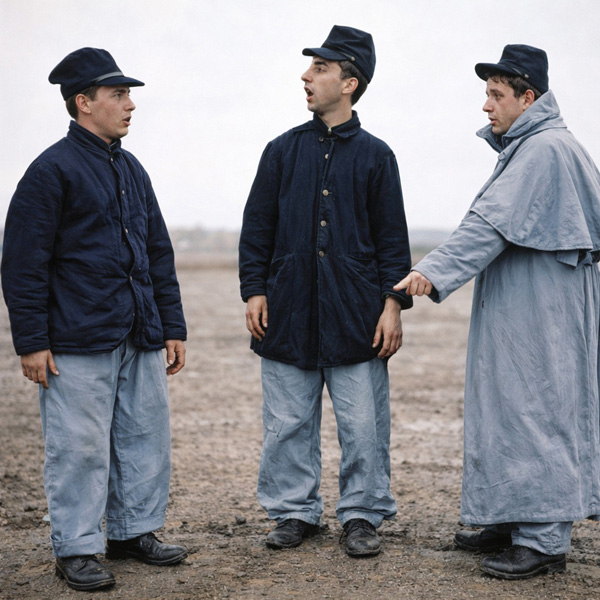
I had a difficult time with this image, too. And in the end Sora refused to give the soldier at left high-water pants.
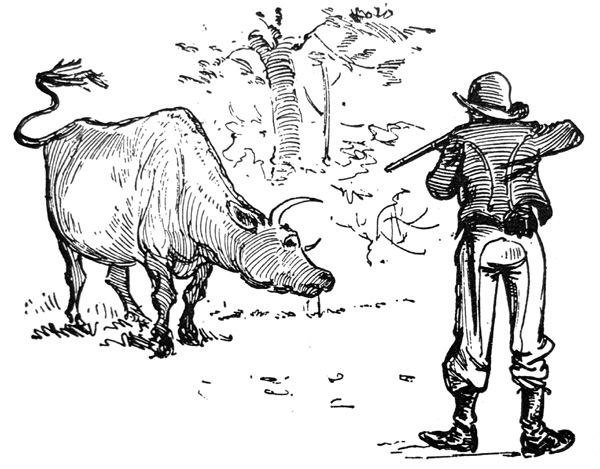
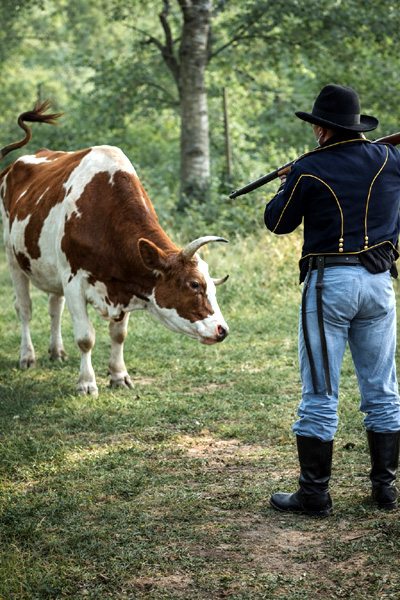
"It was a sad sight to see these animals, which followed the army so patiently, sacrificed one after the other until but a half-dozen were left. When the number had been reduced to this extent, they seemed to realize the fate in store for them , and it often took the butcher some time before he could succeed in facing one long enough to shoot him. His aim was at the curl of the hair between the eyes, and they would avert their lowered heads whenever he raised his rifle, until, at last, his quick eye brought them to the ground."
I thought he looked like a cavalryman and so specified the yellow piping.
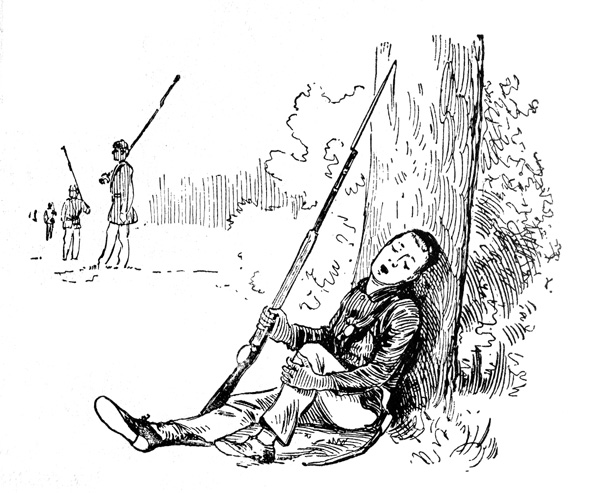
"Indifferent to Consequences."
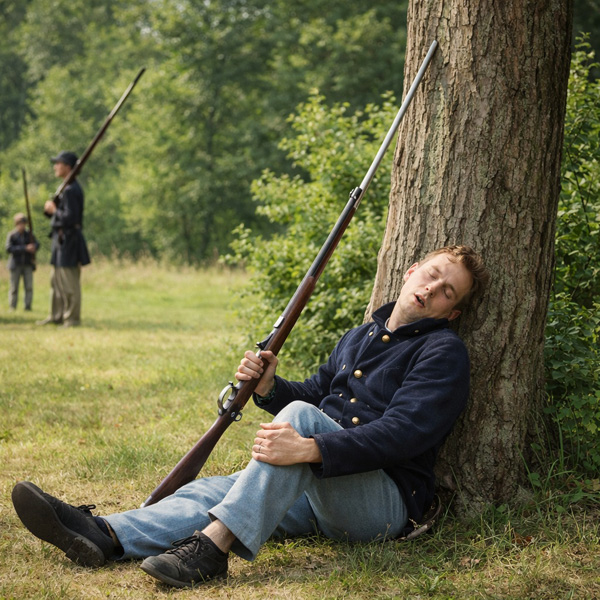
This one looks like he might be dead, not sleeping...
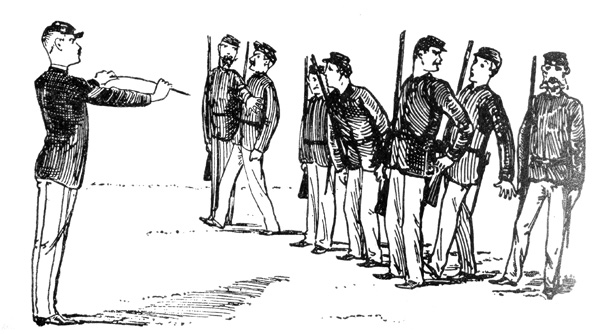
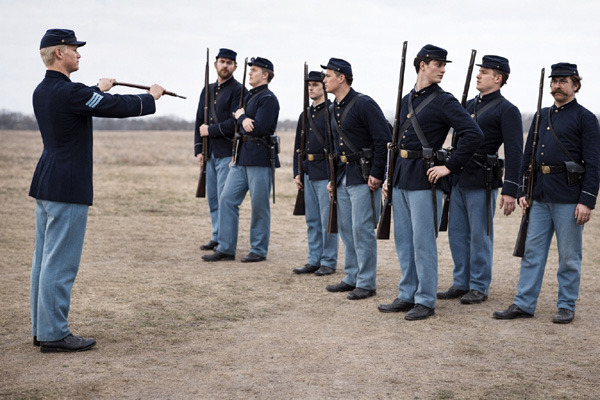
"...there were scores of men that spoke English who would 'hay-foot' every time when they should 'straw-foot.' They were incorrigibles in almost every military respect. Whenever they were out with a squad - usually the 'awkward squad' - for drill, they made business lively enough for the sergeant in charge. When they stood in the rear rank their loftiest ambition seemed to be to walk up the backs of their file-leaders, and then they would insist that it was the file-leaders who were out of step. Members of the much abused front rank often had occasion to wish that the regulation thirteen inches from breast to back might be extended to as many feet; but when the march was backward in line, these front rank men would get square with their persecutors in the rear. To see such men attempt to change step while marching was no mean show."
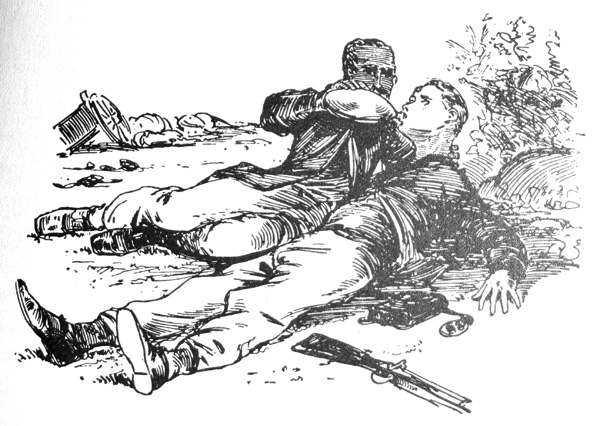
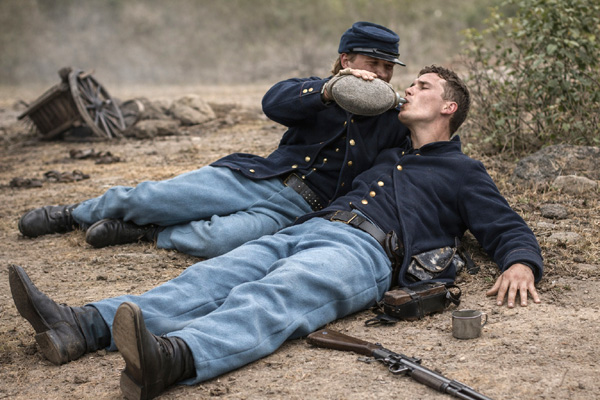
WE'VE DRANK FROM THE SAME CANTEEN
by Private Miles O'Reilly
There are bonds of all sorts in this world of ours
Fetters of friendship and ties of flowers,
And true lover's knots, I ween.
The girl and the boy are bound by a kiss,
But there's never a bond, old friend, like this-
We have drank from the same canteen.
It was sometimes water, and sometimes milk,
And sometimes apple-jack fine as silk.
But, whatever the tipple has been,
We shared it together, in bane or bliss,
And I warm to you friend, when I think of this
We have drank from the same canteen.
The rich and the great sit down to dine,
And they quaff to each other in sparkling wine,
From glasses of crystal and green.
But I guess in their golden potations they miss
The warmth of regard to be found in this -
We have drank from the same canteen.
We have shared our blankets and tents together,
And have marched and fought in all kinds of weather,
And hungry and full we have been;
Had days of battle and days of rest;
But this memory I cling to, and love the best -
We have drank from the same canteen.
For when wounded I lay on the outer slope,
With my blood flowing fast, and but little to hope
Upon which my faint spirit could lean,
Oh, then I remember you crawled to my side,
And, bleeding so fast it seemed both must have died,
We drank from the same canteen.
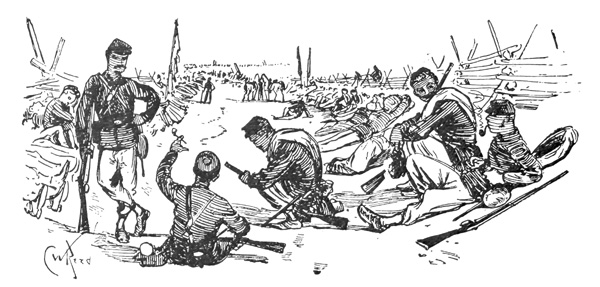
"It was an interesting sight to see a column break up when the order came to halt, whether for rest or other reason. It would melt in a moment, dividing to the right and left, and scattering to the sides of the road, where the men would sit down or lie down, lying back on their knapsacks if they had them, or stretching at full length on the ground. If the latter was wet or muddy, cannoneers sat on their carriages and limber-chests, while infantrymen would perhaps sit astride their muskets, if the halt was a short one. When the halt was expected to continue for some considerable time the troops of a corps or division were massed, that is, brought together in some large open tract of territory, when the muskets would be stacked, the equipments laid off, and each an rush for the 'top rail' of the nearest fence, until not a rail remained. The coffee would soon begin to simmer, the pork to sputter in the flames, and, when the march was resumed, the men would start off refreshed with rest and rations."
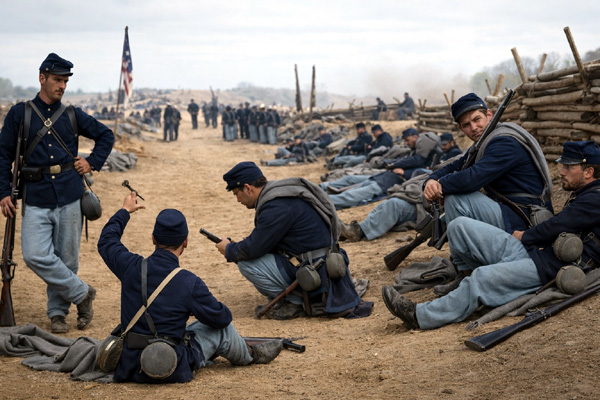
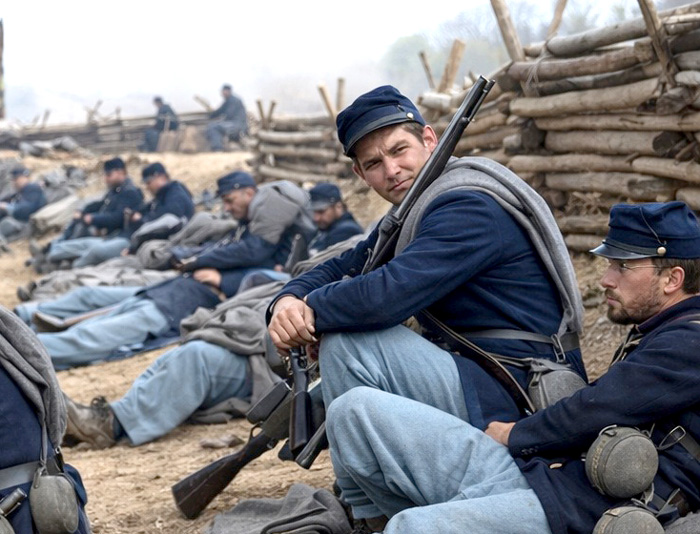
When Sora AI produced this image I was a bit surprised. I could swear I've seen this particular guy at a reenactment somewhere at some time! He looks exactly like somebody I knew.
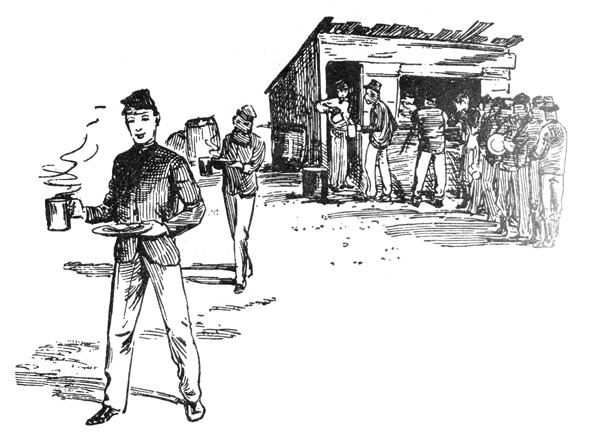
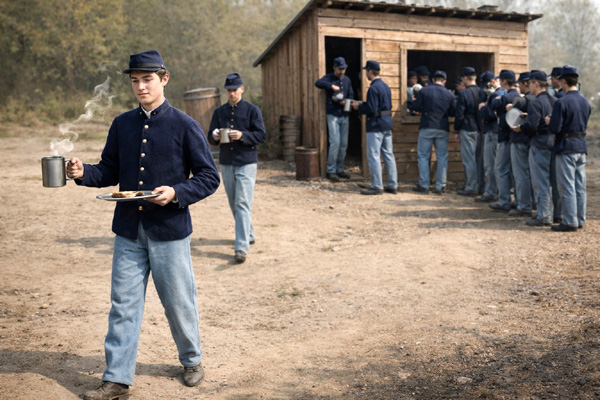
Serving out rations at the cook's shanty.
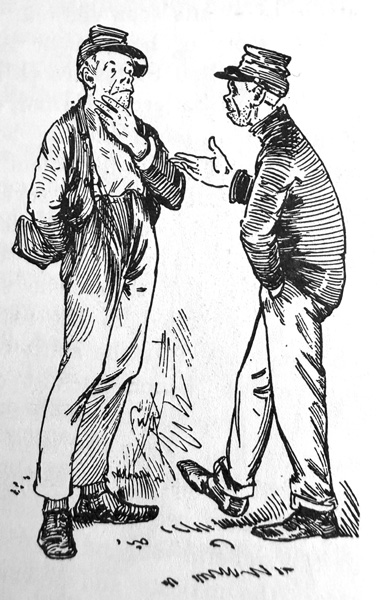
"...that story of the two Irishmen. Meeting one day in the army, one says, 'How are you, Mike?" 'How are you, Pat?' says the other. 'But my name is not Pat,' said the first speaker. 'Nather is mine Mike,' said the second. 'Faix, thin,' said the first, 'it musht be nayther of us."
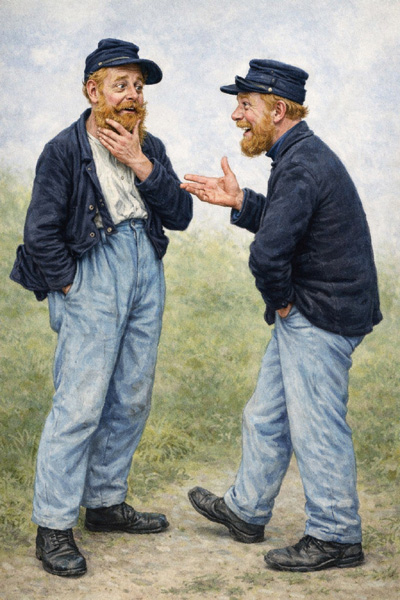
For some weird reason I had no end of trouble with this one. Sora just could not understand the facial expressions. I finally told it, "Make them Irish," and this is what it produced...
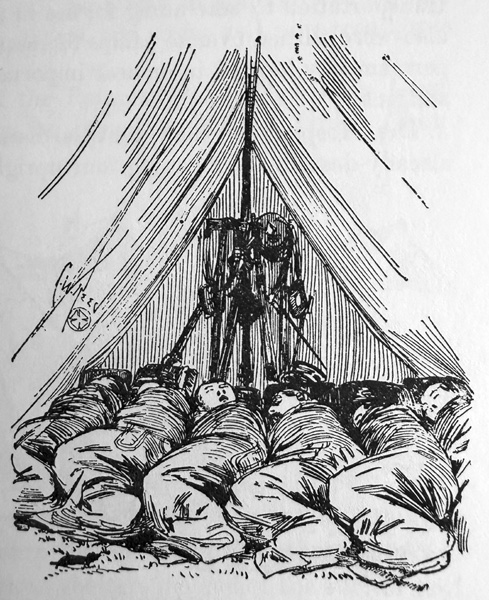
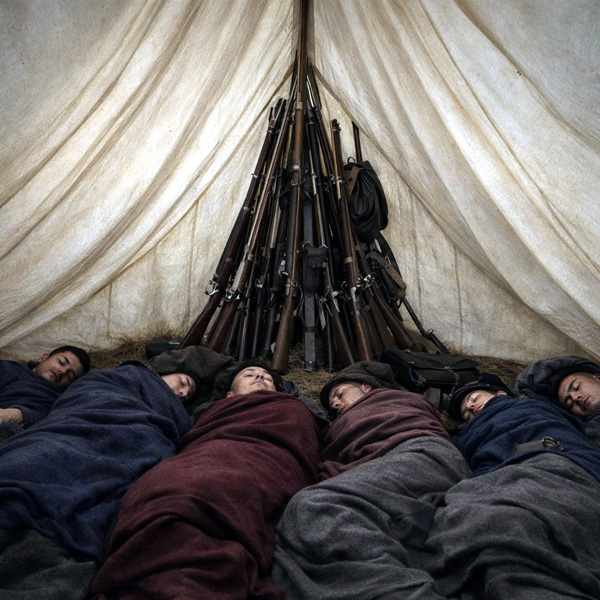
"When so occupied at night, it was rather necessary to comfort that all should turn over at the same time, for six or even five men were a tight fit in the space enclosed, unless 'spooned' together."
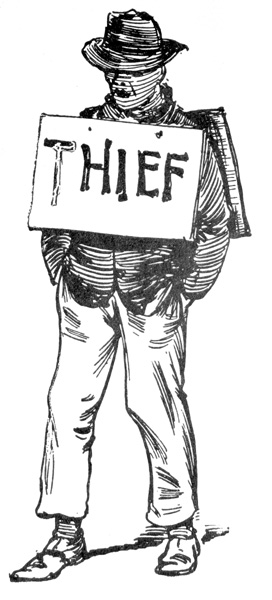
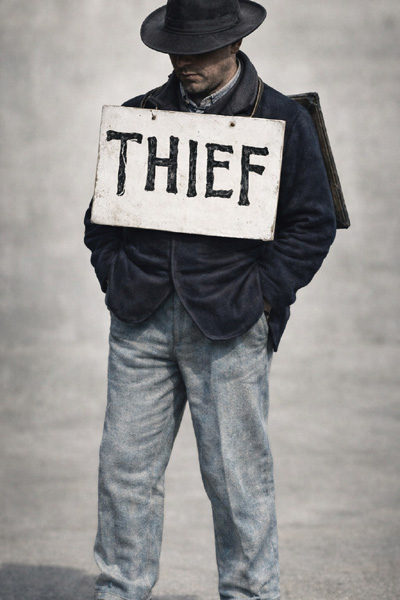
"Posted."
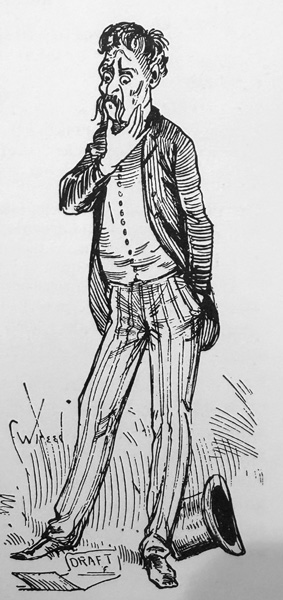
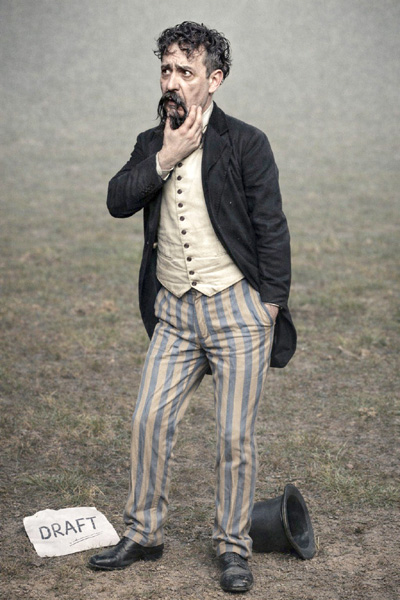
"In 1863 a draft was ordered to fill the ranks of the army, as volunteers did not come forward rapidly enough to meet the exigencies of the service. Men of means, if drafted, hired a substitute, as allowed by law, to go in their stead, when patriotism failed to set them in motion. Many of these substitutes did good service, while others became deserters immediately after enlisting. Conscription was never more unpopular then wehn enforced upon American citizens at this time."
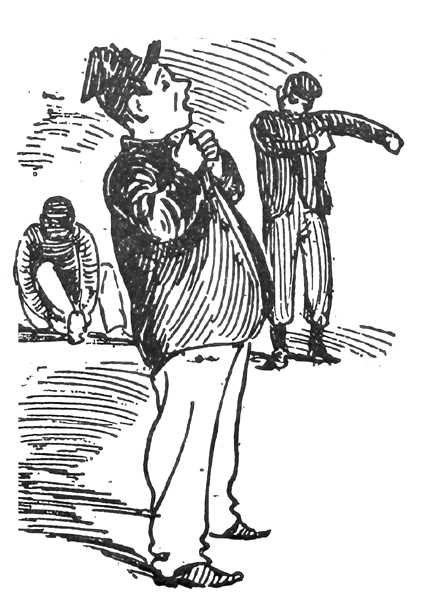
This is one of the many little drawings Reed did to enliven the text; it heads up Chapter XVII, "Scattering Shots - The Clothing."
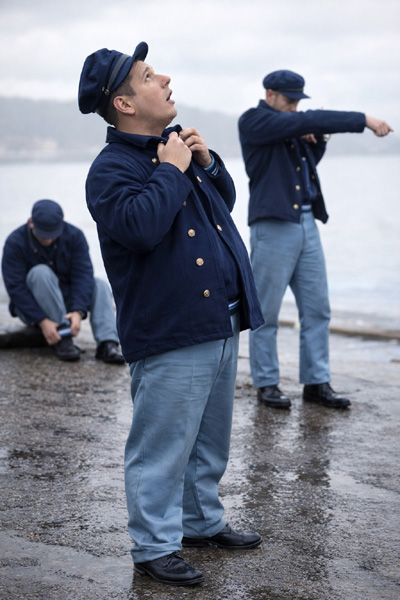
For some reason Sora set it on what looks like modern asphalt near a body of water. The soldier in the back looks like he's sniffing his underarms...
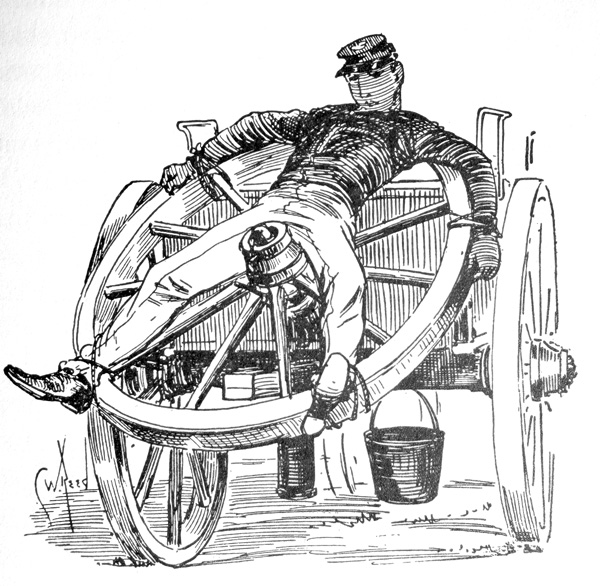
"In the artillery, the punishment was to lash the guilty party to the spare wheel - the extra wheel carried on the rear portion of every caisson in the battery."
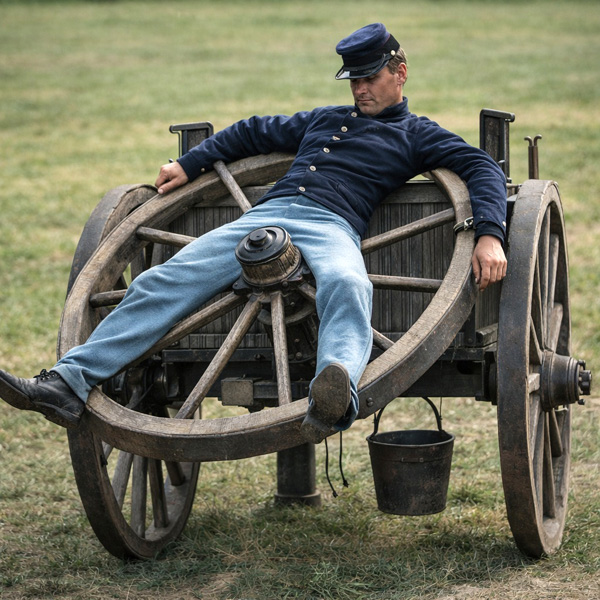
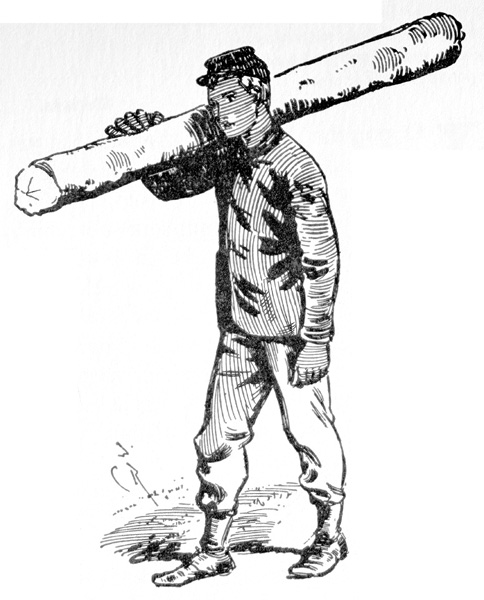
Carrying a log, from Chapter VIII, "Offenses and Punishments": "The methods of punishment were as diverse as the dispositions of the officers who sat in judgement on the cases of the offenders."
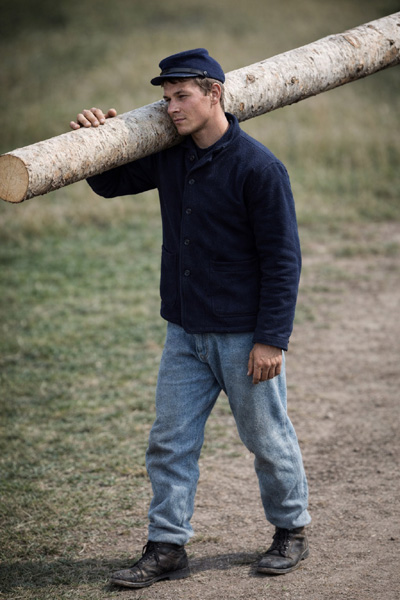
This fellow doesn't appear to be in much pain despite the fact that Sora didn't center the log on his shoulder.
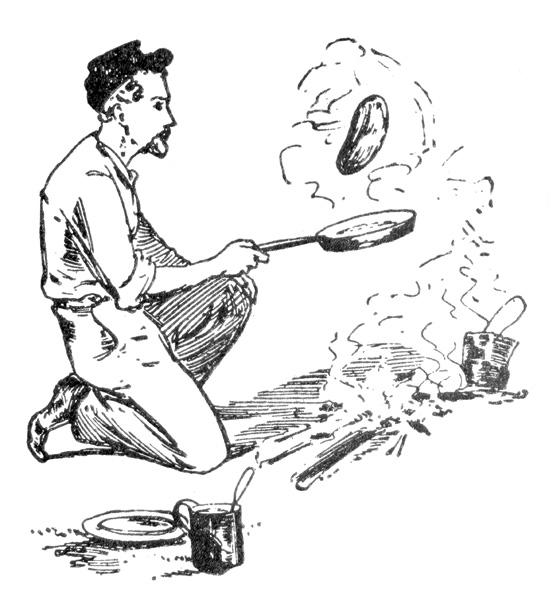
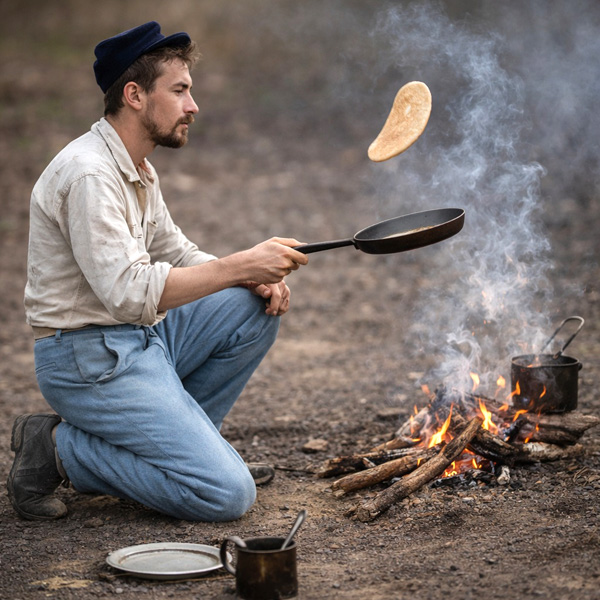
"Towards the end of the war sutlers kept self-raising flour, which they sold in packages of a few pounds. This the men bought quite generally to make into fritters or pancakes. It would have pleased the celebrated four thousand dollar cook at the Parker House, in Boston, could he have seen the men cook these fritters."
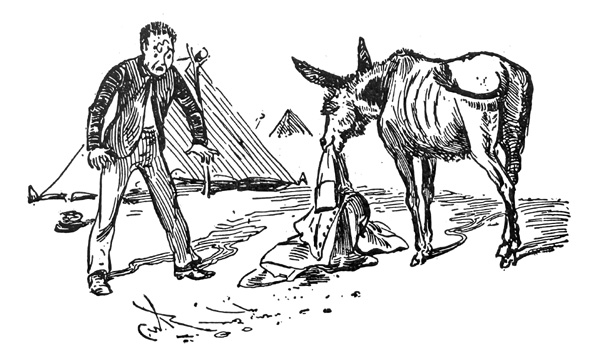
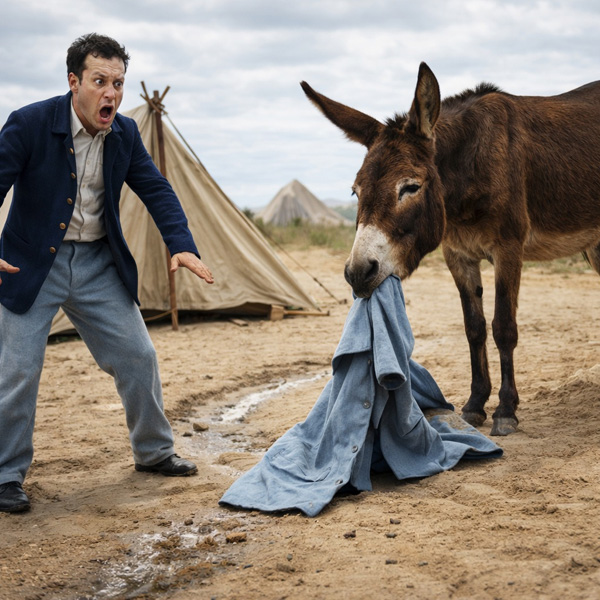
"...mules have a great advantage over horses in being better able to stand hard usage, bad feed, or no feed, and neglect generally. They can travel over rough ground unharmed where horses would be lamed or injured in some way. They will eat brush, and not be very hungry to do it, either. When forage was short, the drivers were wont to cut branches and throw before them for their refreshment. One m.d. (mule driver) tells of having his army overcoat partly eaten by one of his team - actually chewed and swallowed. The operation made the driver blue, if the diet did not thus affect the mule."
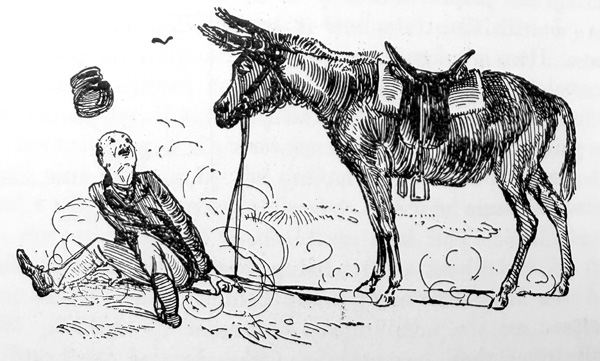
"In making his selection the driver did not always draw a prize. Sometimes his mule would be kind and tractable, and sometimes not. Of course he would saddle him, and start to ride him to camp; but the mule is not always docile under the saddle. He too often has a mind of his own. He may go along all right, or, if he is tricky, he may suddenly pause, bracing his forefeet and settling down on his hind ones, as if he had suddenly happened to think of the girl he left behind him, and was debating whether or not to go back after her. It is when the mule strikes such an attitude as this, I suppose, that Josh Billings calls him "a stubborn fact." But the driver! Well, if at that moment he was off his guard, he would get off without previous preparation, as a man sometimes sits down on ice, and look at the mule. If, however, he was on the alert, and well prepared, the mule, in the end, would generally come off second best."
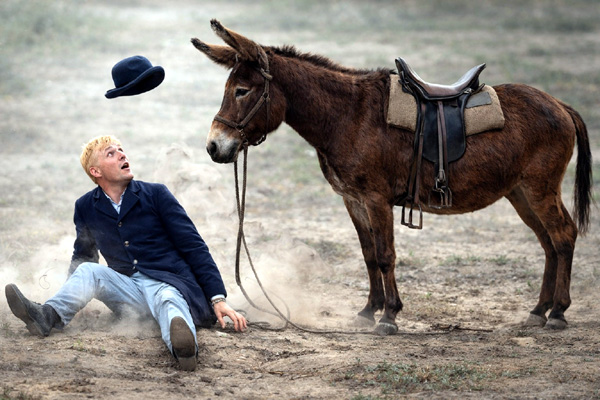
That hat in the air didn't turn out well, did it?
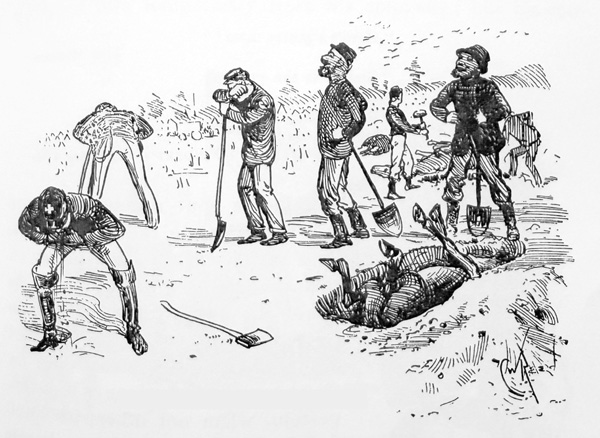
"Having arrived at the place of sepulture, the first business is to dig a grave close to each body, so that it may be easily rolled in. But if there has been no fun before, it commences when the rolling in begins. The Hardened Exception, who has occupied much of his time while digging in sketching distasteful pictures for the Profane Man to swear at, now makes a change of base, and calls upon the Paper-Collar Young Man to 'take hold and help roll in,' which the young man reluctantly and gingerly does; but when the noxious gases begin to make their presence manifest, and the Hardened Wretch hands him an axe to break the legs that would otherwise protrude from the grave, it is the last straw to an already overburdened sentimental soul; his emotions overpower him, and, turning his back on the deceased, he utters something which sounds like 'hurrah! without the h,' as Mark Twain puts it, repeating it with increasing emphasis. But he is not to express his enthusiasm on this alone a great while. There are more sympathizers in the party than hie had anticipated, and not recruits either; and in less time than I have taken to relate it more than half the detail, gallantly led off by the officer of the day, are standing about, leaning over at various angles like the tombstones in an old cemetery, disposing of their hardtack and coffee, and looking as if ready to throw up even the contract. The profane man is among them, and just as often as he can catch his breath long enough be blank blanks the government and then dives again. The rest of the detail stand not far away holding on to their sides and roaring with laughter. But I must drop the curtain on this picture. It has been said that one touch of nature makes the whole world kin. Be that as it may, certain it is that the officer, the good duty soldier, the recruit, and the beat, after an occasion of this kind, had a common bond of sympathy, which went far towards levelling military distinctions between them."
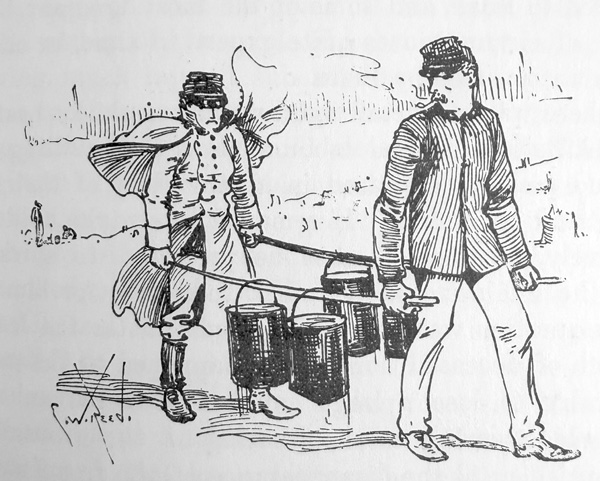
Water for the Cook-House.
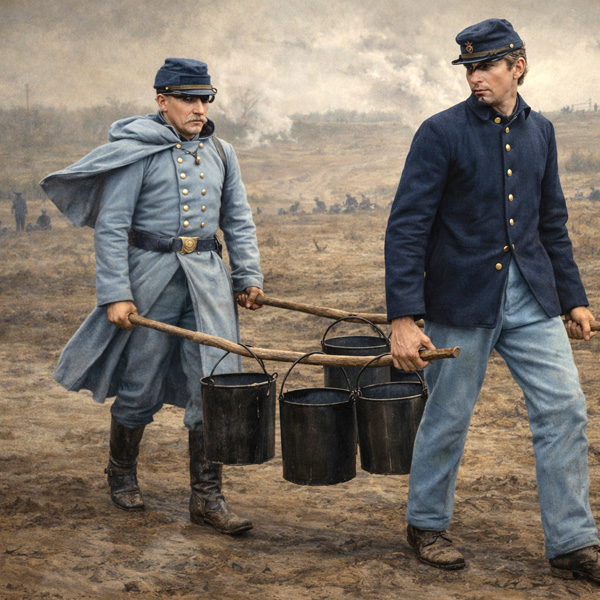
One of Sora's better efforts, despite the fact that it omitted the right soldier's pipe.
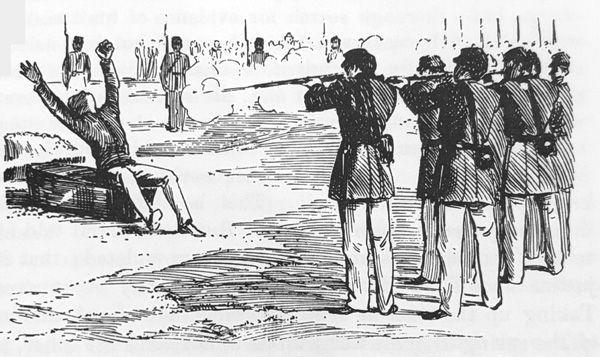
Death of a Deserter: "...the prisoner was seated on an end of his coffin, which had been placed in the centre of the open end of the rectangle, near his grave. The chaplain then made a prayer, and addressed a few words to the condemned man, which were not audible to any one else, and followed them by another brief prayer. The provost-marshal next advanced, bound the prisoner's eyes with a handkerchief, and read the general order for the execution. He then gave the signal for the shooting party to execute their orders. They did so, and a soul passed into eternity. Throwing his arms convulsively into the air, he fell back upon his coffin but made no further movement, and a surgeon who stood near, upon examination, found life to be extinct. The division was then marched past the corpse, off the field, and the sad scene was ended."
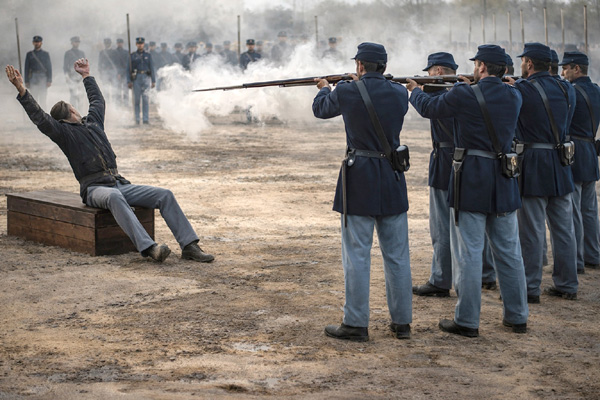
In my personal blog I was doing what I called "Walter Mitty pieces," that is, feeding Sora images of myself and having it reinterpret them in various fanciful ways:
My first Walter Mitty blog entry.
My second Walter Mitty blog entry.
Military Through the Ages. (Major valor-stealing, here.)
